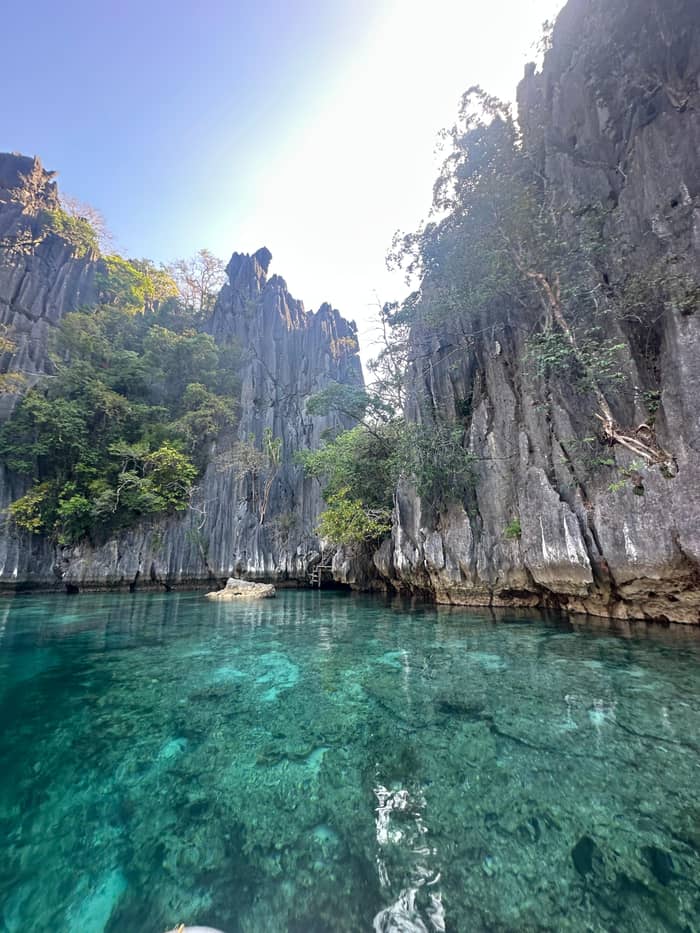
Calm sea
Cool dry months
December to February
See the boat dayGuides
Language
Currency
View availabilityfrom $121 · cancel without payingQuick decision aid
Two taps to a month
Answer two questions and the matching boat day appears with its starting price.
Recommended for you
from $42
Visibility often reaches 20 to 30 meters from March to May, and this day is built around reefs and wrecks.
Recommended for you
from $43
December to February brings clear skies and calm water between islands, and this day covers 7 stops.
Recommended for you
from $120
Kayangan Lake is much less crowded in the rainy months, and free cancellation up to 24 hours lets you move the day.
Rain, heat, Coast Guard cancellations and crowds month by month, read from the Coron weather station and the Department of Tourism, so you can pick a sunny window for your private boat.
Editorial team, coronprivateboat.quest · Updated November 23, 2026 · 7 min reading time
The essentials
Choosing a month for a Coron boat day comes down to rain, wind and what you want to look at once you are afloat. A private hull gives you freedom over the route and the start time, yet it gives you no say over the sea. PAGASA, the national weather service, describes two main seasons: a rainy one from June to November and a dry one from December to May, the dry one split into a cooler December to February and a hotter March to May.1 That calendar is the frame for everything below.
The numbers that fill the frame come from the PAGASA station at Coron itself, which publishes climatological normals for 1991 to 2020.7 A normal is an average over many years, so any single week can break it, but it is the most honest picture of what a given month usually holds. Treat it as the odds you are playing, then use the sections below to decide how much risk suits your trip.
One more caution before the detail: a sunny forecast does not by itself give you a good day on the water. Wind, swell and Coast Guard decisions matter just as much as cloud, and a lagoon stop can be crowded or calm depending on the hour you arrive. The months differ in all of those ways, which is why a flexible start and a spare day in town beat any perfect month on paper.
Month by month
| Months | Rain in mm | Rainy days | Mean maximum |
|---|---|---|---|
| December and January | 90.3 and 19.219,14 | 6 and 319,14 | 32.3 and 32.5 °C19,14 |
| February and March | 22.9 and 15.415,18 | 2 and 315,18 | 32.7 and 33.1 °C15,18 |
| April and May | 37.0 and 186.917,9 | 4 and 1117,9 | 34.1 and 33.5 °C17,9 |
| June and July | 318.7 and 521.510,5 | 17 and 2110,5 | 32.1 and 30.9 °C10,5 |
| August and September | 471.7 and 470.411,12 | 19 and 2011,12 | 31.1 and 31.2 °C11,12 |
| October and November | 241.2 and 107.113,8 | 14 and 713,8 | 32.1 and 32.8 °C13,8 |
PAGASA normals for the Coron station, 1991 to 2020; a rainy day has at least 1 mm of rain.7,20
The Department of Tourism guide places the dry season from late November to May and describes it as the time of steadier weather, calm seas and the clearest underwater views.2 For a day built around swimming in lagoons and snorkeling reefs, that is the window to aim at. Within it, the months feel different, so it helps to split the dry season in two.
From December to February the guide describes skies that are almost always clear and water that is calm enough to make boat travel between islands smooth and enjoyable.4 The Coron station backs the dry picture: January averages 19.2 mm of rain on 3 rainy days and February 22.9 mm on 2 rainy days.14,15 Choose these months when comfort on deck matters more to you than the very clearest water.
From March to May the guide reports peak clarity under the surface, with visibility often 20 to 30 meters, which is the argument for a snorkeling-led day.3 Pick that stretch if you want Coron island hopping clear water in your own photographs, not only in the brochure. The cost is heat: PAGASA notes that warm temperatures and high humidity make March to May especially uncomfortable,16 and the station's mean maximum reaches 34.1 °C in April.17 A boat has shade and a sea breeze, but plan a long swim break in the middle of the day.
Rain by month
The station numbers show how sharply the year turns. May still averages 186.9 mm of rain on 11 rainy days, and June climbs to 318.7 mm on 17 rainy days.9,10 PAGASA counts a rainy day as 24 hours, from 8 AM to 8 AM, with at least 1 mm of rain,20 so a rainy day can mean a short shower as well as a washout, and many of them pass within hours.
The wet heart of the year runs through the summer months. July averages 521.5 mm on 21 rainy days, August 471.7 mm on 19 and September 470.4 mm on 20.5,11,12 Across the whole year the station records 2,502.3 mm on 127 rainy days,23 and most of that falls in the stretch above. A day that is dry in the morning can still turn by the afternoon, which argues for an early start in these months.
The shoulder months are easier to read. October still averages 241.2 mm on 14 rainy days, while November drops to 107.1 mm on 7 and December to 90.3 mm on 6.13,8,19 That fall is why the guide and PAGASA draw the line a little differently, with the guide's dry season starting in late November and PAGASA's in December. Late November is a bet that usually pays, and early December is safer.
Seasons compared
Calm sea
December to February
See the boat day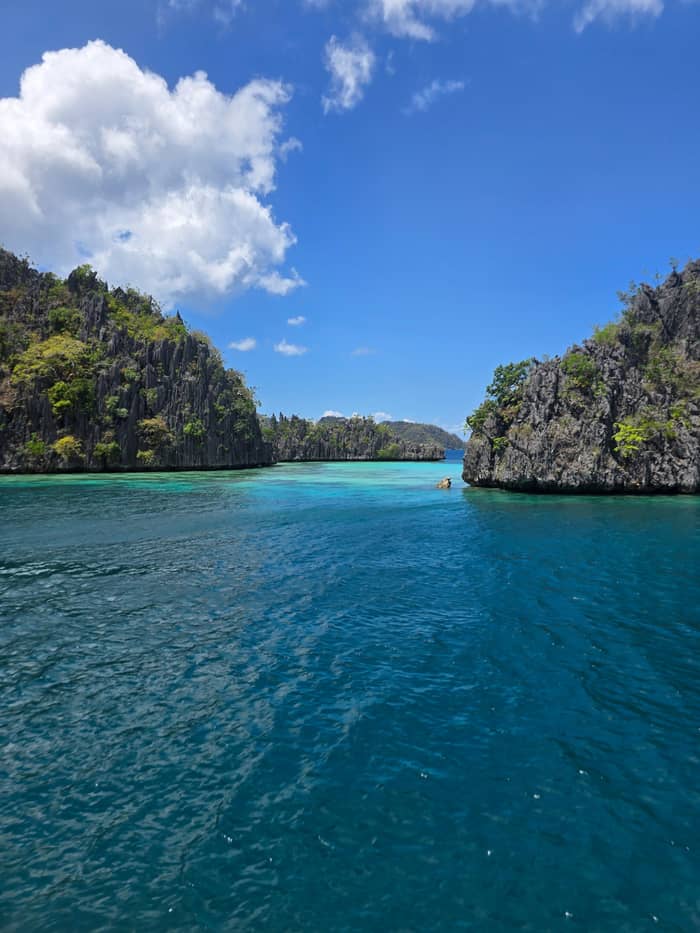
Clear water
March to May
See the boat day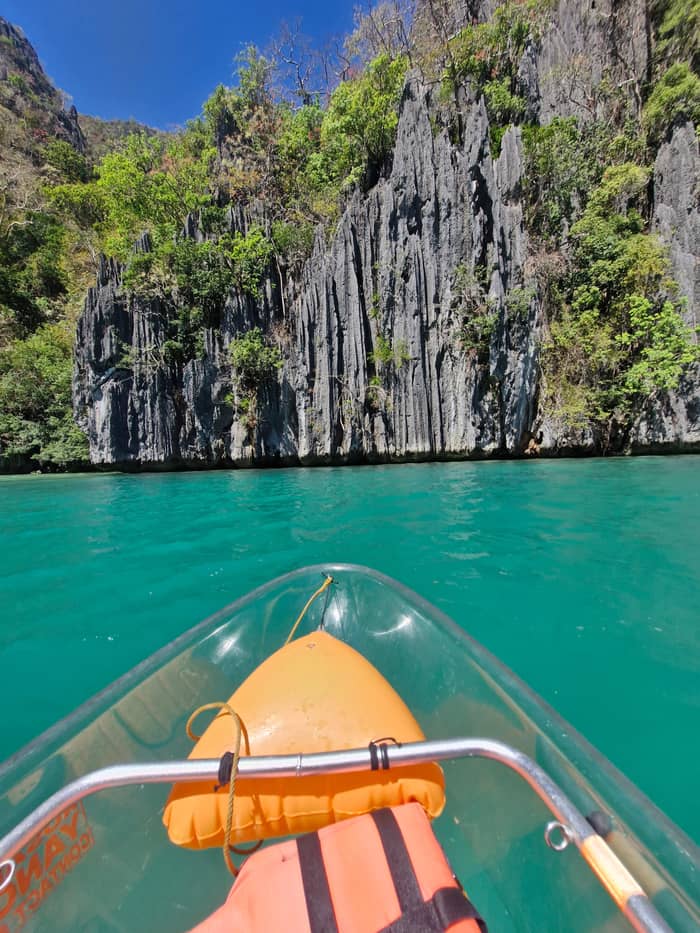
Quiet lakes
June to November
See the boat dayThe rain is the smaller risk to your plan. PAGASA says tropical cyclones affect the western North Pacific, including the Philippines, from May to November, plus the occasional storm outside those months.28 A passing storm far away can still churn the sea, and the call on whether boats sail belongs to the Coast Guard, not to your captain or to the booking page.
Here the tourism guide leaves no doubt: during the rainy months the Coast Guard can call off every island-hopping tour for safety when rain is heavy or the wind is strong.6 The shared Ultimate listing says the stops can be reshuffled by tides or a Coast Guard order, and that guests hear about any government-ordered suspension. Another listing offers a refund or a new date when the Coast Guard cancels.
For your own booking, the practical answer is to hold a spare day. The home private boat refunds you in full when you cancel the day before, which lets you shift the date when the forecast turns. Keep the plan loose too: the guide calls a flexible itinerary essential for weather delays in the rainy window.24 Put the boat day in the middle of your stay, never on the last day before a flight.
Compare the days
Pick a party size and read the shared-tour prices per person, then compare them with a private boat.
4 options compared
Pick a party size and read the shared-tour prices per person, then compare them with a private boat.
≈
View≈
View≈
View≈
ViewConverted at the ECB reference rate, from-prices as listed by GetYourGuide. The precise amount is shown when you book.
A year on the water
Late November
Rain falls to 107.1 mm in November and the guide's dry season begins.8,2
December to February
The guide describes clear skies and calm water between islands.4
March to May
Visibility often reaches 20 to 30 meters.3
Late May and June
July to September
July averages 521.5 mm, August 471.7 mm and September 470.4 mm at the station.5,11,12
October
October averages 241.2 mm on 14 rainy days.13
The sunniest months are also the busiest, and the Department of Tourism guide describes the other side of the bargain. In the rainy months accommodation prices drop and popular spots such as Kayangan Lake are much less crowded.21 That matters on a boat day because the lakes and lagoons are small, and a shared tour group at the same stop changes the feel of the swim.
The guide also names the months to pick if crowds are your concern: June and November, just before or after the peak season begins.22 November is the better bet of the two for weather, because the station shows it at 107.1 mm, far below June's 318.7 mm.8,10 Early November holds a little more risk than late November, so keep the day flexible if you choose it.
A private boat softens the crowd problem in every season, because you decide the order of stops. On a private boat the start is negotiable: the guide advises asking for an early departure, ahead of the group boats, so the lagoons are quiet when you arrive.25 Settle the exact hour with your operator when you book, and ask for the lakes first.
Video
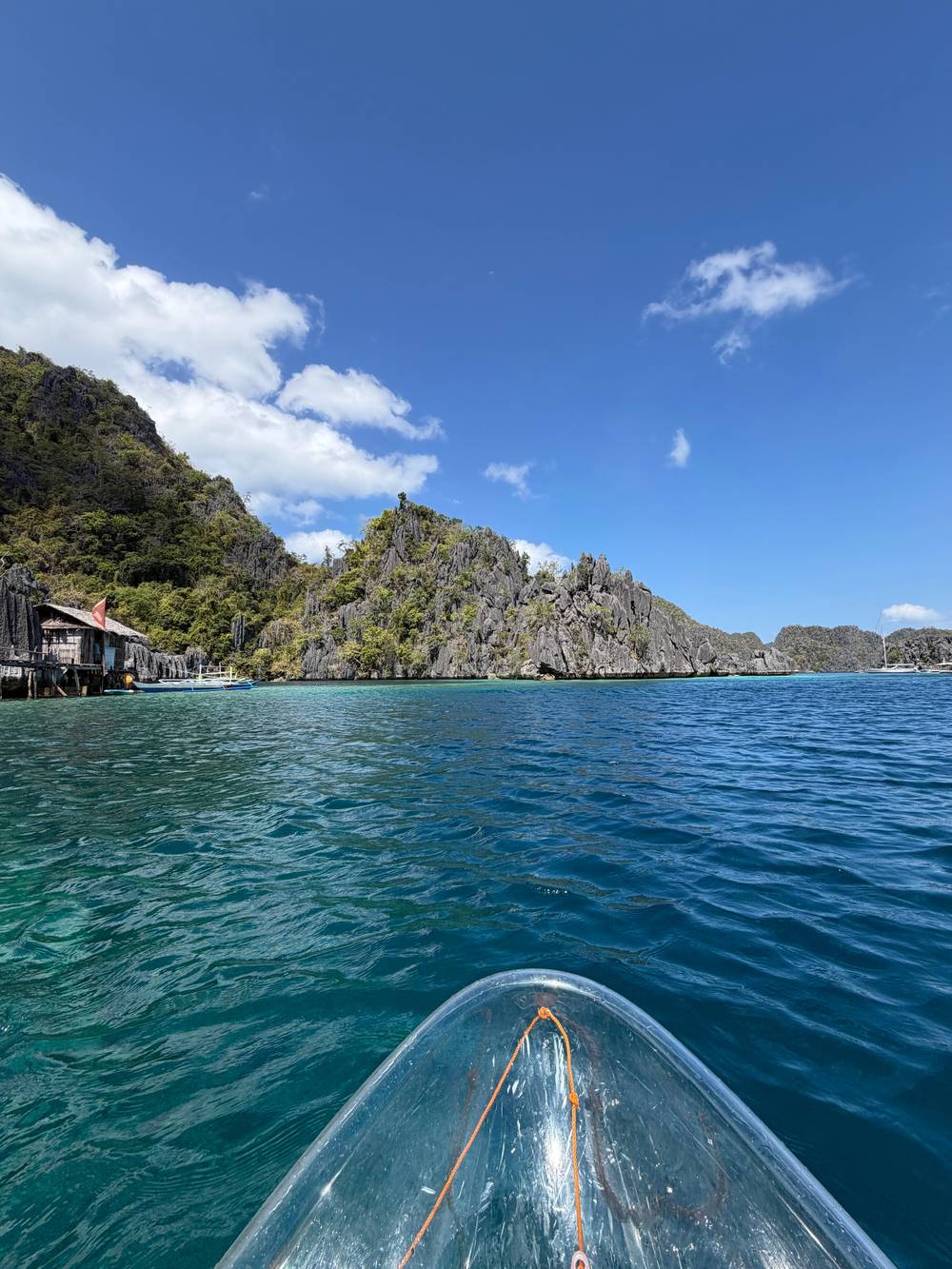
Kristi Travel Escape on YouTube · Tap play to load the video; not before.
The skies are almost always clear, and the water is incredibly calm, making boat travel between islands smooth and enjoyable
Before you pick a date
Start with the question that matters most to you. If the answer is the clearest possible water for snorkeling and photographs, aim for March to May and accept the heat. If it is comfortable sea and cooler air, aim for December to February. If it is fewer people and lower prices, consider the rainy months and keep a spare day, or the weeks at the edges of the dry stretch.
Then look at who is coming on your Coron island hopping day tour. Children, older relatives and anyone prone to seasickness do better in the calm months, and the sea rewards patience in November and December. Strong swimmers who want the lagoons to themselves can take more risk in June or early November, and a private boat makes that bet cheaper than a shared tour because only your group has to agree to move the day.
Last, set a rule for yourself before you leave home: you will not trade the safety call for a sunny photo. The Coast Guard decides the water, your captain advises, and you move the day without argument. With room for a spare day and a month that matches your priorities, a boat day around Coron is one of the more reliable outings in Palawan, whatever the season.
FAQ
The guide reports the clearest views of the year then, often 20 to 30 meters.3
Tours do run, though the Coast Guard may cancel every island-hopping departure on days of heavy rain or strong wind.6
The station's mean maximum temperature is 34.1 °C in April.17
The guide names them as the months before and after the peak season begins.22
A listing offers a refund or a rebooking when the Coast Guard cancels the day.
The guide advises asking the captain for an early departure, ahead of the group boats.25
Sources
Also worth reading
Planning a private boat day in Coron? Ask a real person here.